A short wildlife video has been quietly doing something remarkable: making people feel deeply for an animal they will never meet, in a forest they may never visit, during a moment that lasted only minutes.
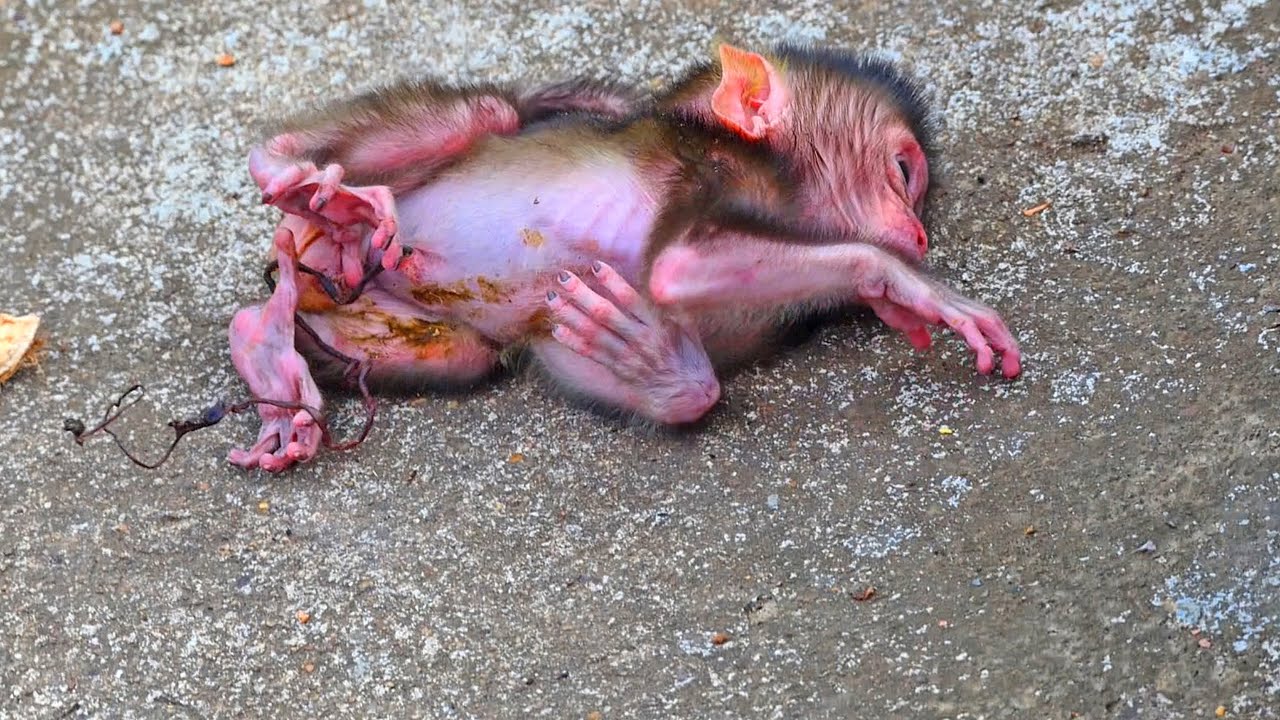
The footage, posted by the YouTube channel Newborn Babie Monkey, shows a mother monkey refusing contact with her newborn shortly after birth. The infant, unsteady and searching, moves toward its mother repeatedly. She moves away. The cycle repeats. For many viewers, it is almost unbearable to watch.
That emotional response is worth examining, because it reveals something significant about the way humans relate to other species — and why wildlife content, particularly content involving newborns and maternal behavior, consistently draws some of the largest and most emotionally engaged audiences online.
Primates occupy a unique space in how humans perceive the animal kingdom. Their faces are expressive in ways that feel familiar. Their social structures mirror, in broad strokes, our own. When a monkey mother holds her infant close, something in us recognizes it. And when she does not — when she turns away from a newborn that clearly needs her — that recognition curdles into something uncomfortable.
Psychologists who study human-animal interaction note that this kind of footage activates empathy circuits that are not necessarily reserved for members of our own species. The sight of a vulnerable creature being refused care is processed, on some level, the way we would process a similar human situation. That neurological overlap is powerful, and it explains why so many viewers report feeling distressed after watching clips like this one.
But the video also serves an educational function that extends beyond emotional impact. For general audiences, it challenges a deeply held assumption: that maternal love in animals is automatic, unconditional, and biologically guaranteed. It is not. Primate researchers have long documented the full spectrum of maternal behavior, from intensely protective mothers who carry their infants for months, to those who, for reasons rooted in stress, inexperience, or health, are unable to provide basic care.
Understanding that range matters. It matters for wildlife conservationists managing captive breeding programs. It matters for sanctuary workers who must intervene when wild-born infants are abandoned. And it matters for the public, because a more accurate understanding of animal behavior leads to more informed advocacy and more nuanced conversations about animal welfare.
The Newborn Babie Monkey channel has built a following by documenting exactly these kinds of unscripted, unvarnished moments in primate life. The footage is not produced for emotional manipulation — it simply records what happens, and trusts that what happens is enough.
In this case, it clearly is. The response to the video suggests that audiences are not looking away from difficulty when it comes to wildlife. They are leaning in, asking questions, and sitting with discomfort in a way that speaks well of their capacity for genuine curiosity and care.
Source: Newborn Babie Monkey, YouTube (https://www.youtube.com/watch?v=EFrIIAu_av0)
Watch the original video →