Long before a wildlife camera captures the moment, the story has already begun — in the hormones circulating through a mother’s bloodstream, in the stress of her environment, in the accumulated experiences that shape whether she will reach for her infant or pull away.
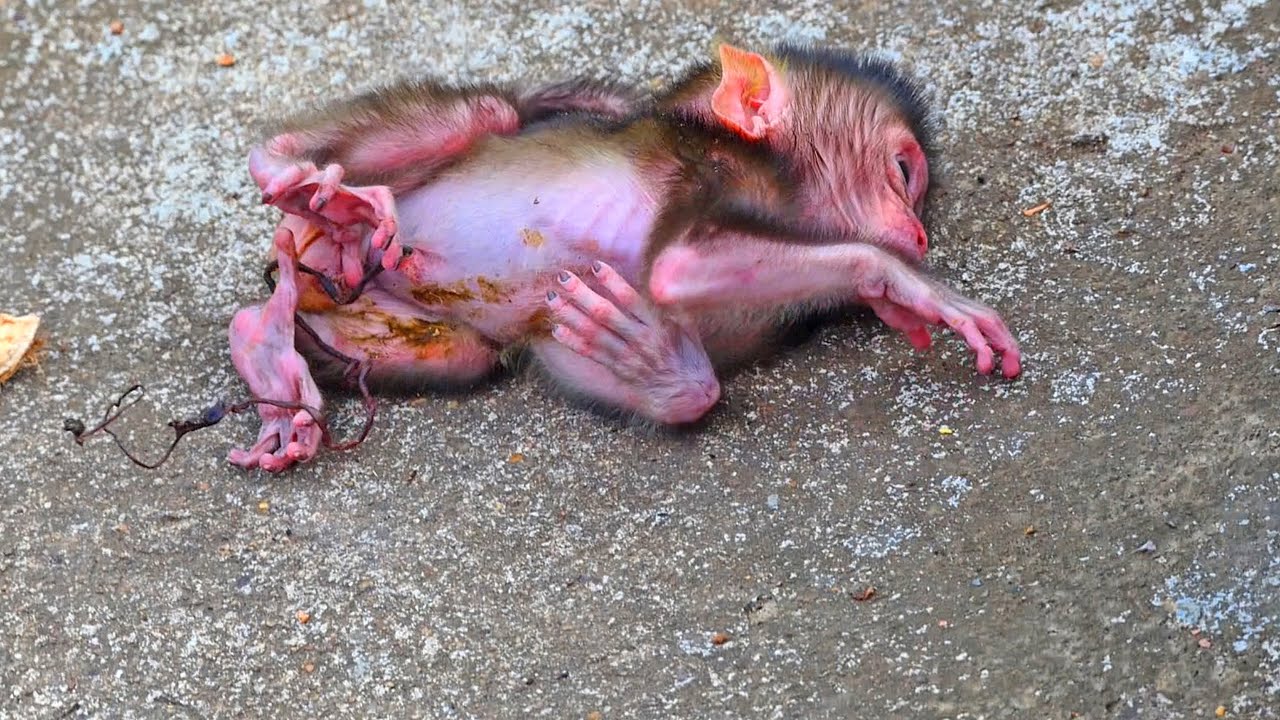
A video recently shared by the YouTube channel Newborn Babie Monkey, showing a mother monkey refusing and ultimately abandoning her newborn, has prompted the kind of quiet reflection that good wildlife footage can inspire. The clip is emotionally affecting, but it is also, for those who study primate behavior, deeply familiar.
Maternal rejection in monkeys is not a rare anomaly. It is a documented phenomenon that occurs across dozens of species, from rhesus macaques in research settings to wild langurs in South Asian forests. Scientists have identified several recurring factors that appear to increase the likelihood of rejection, though no single explanation covers every case.
First-time mothers are statistically more likely to struggle. Without prior experience of birth and nursing, young female primates sometimes respond to their newborns with apparent confusion or fear rather than the instinctive protectiveness that experienced mothers display. In some observed cases, this initial hesitation resolves within hours or days, particularly if the mother is in a stable social group where other females can model caregiving behavior.
Environmental stress plays a significant role as well. Monkeys living in disrupted habitats, or in captivity under suboptimal conditions, show higher rates of maternal rejection than those in stable, resource-rich environments. The biological logic, while cold, is coherent: a mother whose own survival is uncertain may be responding to signals that tell her this is not a viable moment to invest in offspring care.
Infant health is another variable. Mothers of species that rely on infant signaling — the specific cries, movements, and grip strength of a healthy newborn — may withdraw from infants whose signals are weak or atypical, a behavior that, however painful to observe, reflects an evolutionary calculation about where to direct limited resources.
What makes the footage from Newborn Babie Monkey worth considering alongside this research is the way it humanizes data that can otherwise feel abstract. Statistics about rejection rates mean little until you watch a specific mother and a specific infant, and understand that this pattern has played out countless times in forests and fields and laboratory colonies around the world.
For wildlife caregivers and conservationists, understanding these dynamics is practical as well as academic. Sanctuaries that care for rejected primates have developed hand-rearing protocols designed to minimize the psychological impact of early maternal separation, recognizing that infants raised without maternal contact face elevated risks of behavioral and social difficulties in later life.
The video does not offer answers. It offers a moment — real, unadorned, and ecologically honest. And sometimes, that is exactly what is needed to begin asking better questions.
Source: Newborn Babie Monkey, YouTube (https://www.youtube.com/watch?v=EFrIIAu_av0)
Watch the original video →