We tend to think of kindness as a human invention. We write about it, teach it to children, build philosophies around it. And then a small monkey named Luna leans over a crying lynx cub and makes us wonder whether we had it right all along.
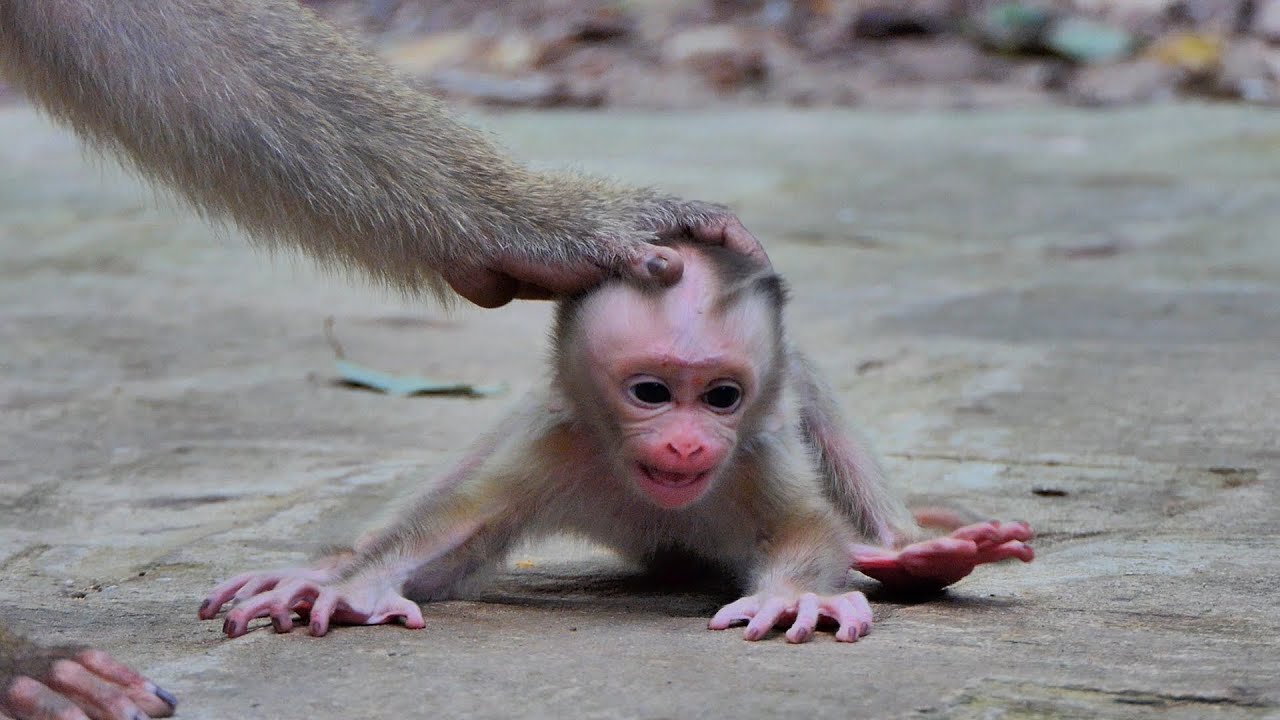
Footage shared by the Cambodia Monkey channel captures a moment that is simple on the surface and quietly profound underneath. Luna, a female monkey, encounters a newborn lynx — a wild cat species known for its tufted ears, spotted coat, and piercing amber eyes even in infancy. The cub is newborn, small, and crying. Luna does not retreat. She moves in, deliberate and calm, and she tries to help.
For viewers, the clip arrives like a small interruption in the noise of daily life. Comments from those who have watched it tend to cluster around the same themes: surprise, warmth, and something that might be described as relief. Relief that tenderness exists even in places where we do not think to look for it.
That emotional response is not accidental. Humans are wired to respond strongly to infant distress calls — it is one of the more universal features of our neurology — and watching another creature respond to that same signal with care rather than indifference activates something deep. We recognize the impulse. We know what Luna is doing, even if she cannot name it.
Researchers who study primate behavior have long noted that certain monkeys display what is sometimes described as alloparental care — tending to young that are not their own. In some cases, this extends across species lines, particularly when animals have been raised in mixed or human-adjacent environments. The behavior is not random. It suggests a level of social awareness and emotional responsiveness that continues to challenge older, simpler models of animal cognition.
But the science, as compelling as it is, almost feels secondary here. What strikes viewers is not the taxonomy of the behavior. It is the image itself: one small animal, moved by the sound of another’s distress, choosing to stay rather than walk away.
Luna cannot fix everything. She cannot feed the cub or replace its mother. Her efforts are imperfect and partial, as most acts of kindness are. But she offers what she has — her presence, her attention, her gentle touch — and that, it turns out, is enough to matter.
There is a version of this story that is simply a cute animal video, and there is nothing wrong with that version. But there is also a version where Luna becomes a kind of accidental mirror, reflecting back something we sometimes lose track of in ourselves: the instinct to move toward suffering rather than away from it.
In less than a minute of footage, a monkey named Luna makes that instinct look like the most natural thing in the world.
Source: Cambodia Monkey, YouTube (https://www.youtube.com/watch?v=e8u1YtykS6A)
Watch the original video →