Long before the internet gave us a daily feed of animals behaving in unexpected ways, naturalists and researchers were quietly cataloguing something that did not fit neatly into standard models of animal behavior. Animals, it turned out, sometimes cared for members of entirely different species. Not often, not predictably, but often enough to demand explanation.
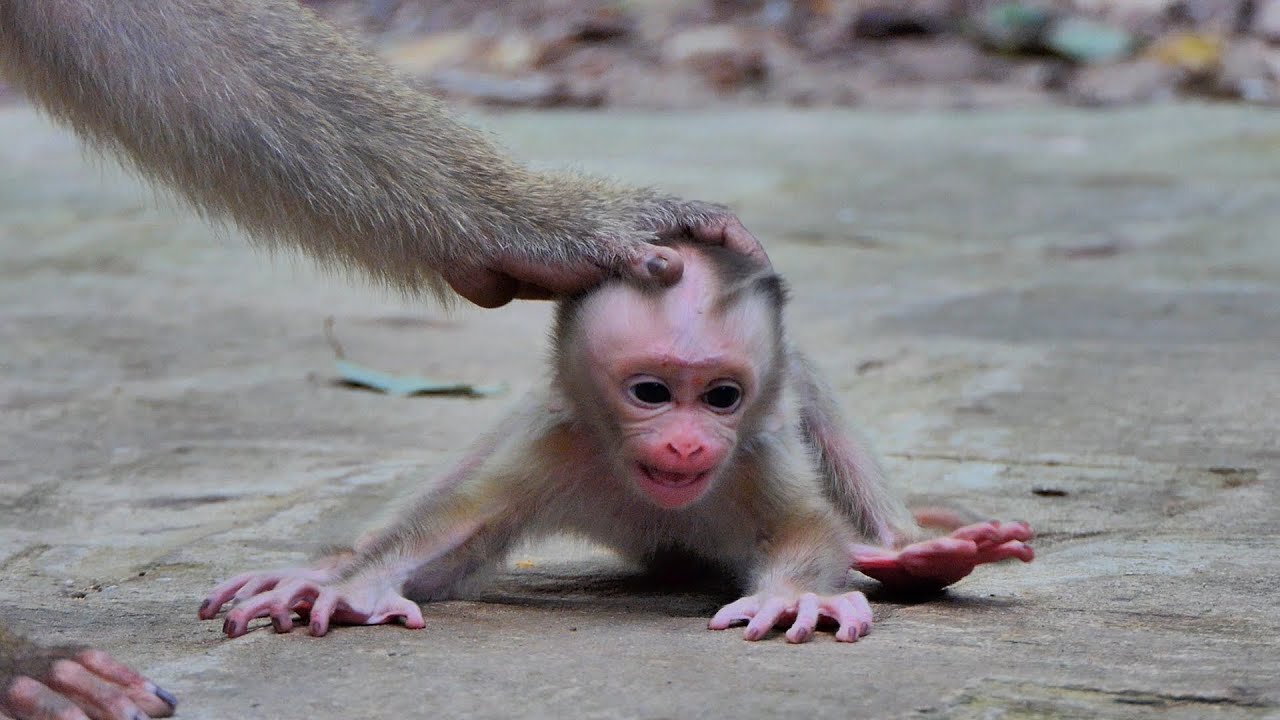
A recent video from the Cambodia Monkey channel adds one more entry to that catalogue. In the footage, a female monkey named Luna encounters a newborn lynx cub in visible distress. Rather than ignoring the cub’s cries or retreating from an unfamiliar animal, Luna approaches and attempts to soothe it — touching, hovering, staying close in the manner of an attentive caregiver.
The moment is charming. It is also, for those familiar with the science, genuinely interesting.
Primates occupy a particular place in cross-species care research. Among mammals, they are some of the most socially complex, and their caregiving behaviors are correspondingly nuanced. Monkeys and apes have been observed adopting orphaned animals, grooming members of other species, and responding to infant distress calls with protective or comforting behaviors. These are not isolated incidents. They recur across different primate species and different environments.
What makes Luna’s response to the lynx cub notable is partly the species involved. Lynxes are wild felids — compact, sharp-sensed, and decidedly not domestic. A newborn lynx cub still carries that wildness even in its smallest, most helpless form. For a monkey to approach one without hesitation, read its distress, and attempt to intervene suggests a social intelligence that operates independently of species familiarity.
The Cambodia Monkey channel, which documents the lives of monkeys in Cambodian settings, has captured various interactions between its resident monkeys and other animals over time. These videos sit within a broader tradition of wildlife observation in Southeast Asia, a region with extraordinary biodiversity and a long history of humans living in close proximity to primates and other wildlife.
Context matters here. Animals raised or living near humans, or in environments where multiple species interact regularly, may develop more flexible social responses than their purely wild counterparts. Luna’s willingness to engage with the lynx cub may reflect both her individual temperament and the environment she inhabits — one where the boundaries between species are, perhaps, a little more permeable than usual.
None of this diminishes the moment. If anything, understanding the background makes it richer. Luna is not simply performing cuteness for a camera. She is acting out a behavior pattern that connects her to a long, poorly understood, and quietly remarkable tradition in the animal world: the impulse to care, even when no instinct strictly requires it.
The lynx cub cries. Luna stays. And somewhere in that small exchange lives a question that researchers and curious humans alike are still working to answer — about empathy, about the origins of compassion, and about what we share with the creatures we so often assume are nothing like us.
Source: Cambodia Monkey, YouTube (https://www.youtube.com/watch?v=e8u1YtykS6A)
Watch the original video →